Every commercial kitchen in Salisbury sends grease down the drain, no matter how careful the staff is. Pans get rinsed, plates get sprayed, the dish machine runs hot. The grease trap is there to catch it. Pumping is what keeps the trap catching it.
What happens when it's skipped
A grease trap fills slowly, so it's easy to forget. Here's how it usually plays out when it goes too long.
First, it stops separating. The floating grease layer gets thick and the sludge on the bottom rises. The space in the middle, where water slows down long enough for grease to float, shrinks. Grease starts leaving with the water.
Then the line downstream clogs. Grease that leaves the trap cools and sticks to the pipe. Over weeks it narrows the line between the building and the sewer, or the septic tank.
Then the kitchen notices. Floor drains back up during the dinner rush. The dish sink won't drain. There's a smell near the lids out back that customers can catch on the way in.
Sometimes someone else notices. Sewer utilities and inspectors pay attention to grease from food businesses because it causes so many public sewer blockages. They set the rules, and they can ask to see service records. Check with your utility or inspector for what applies at your location.
Pumping on schedule costs far less than any step past the first one.
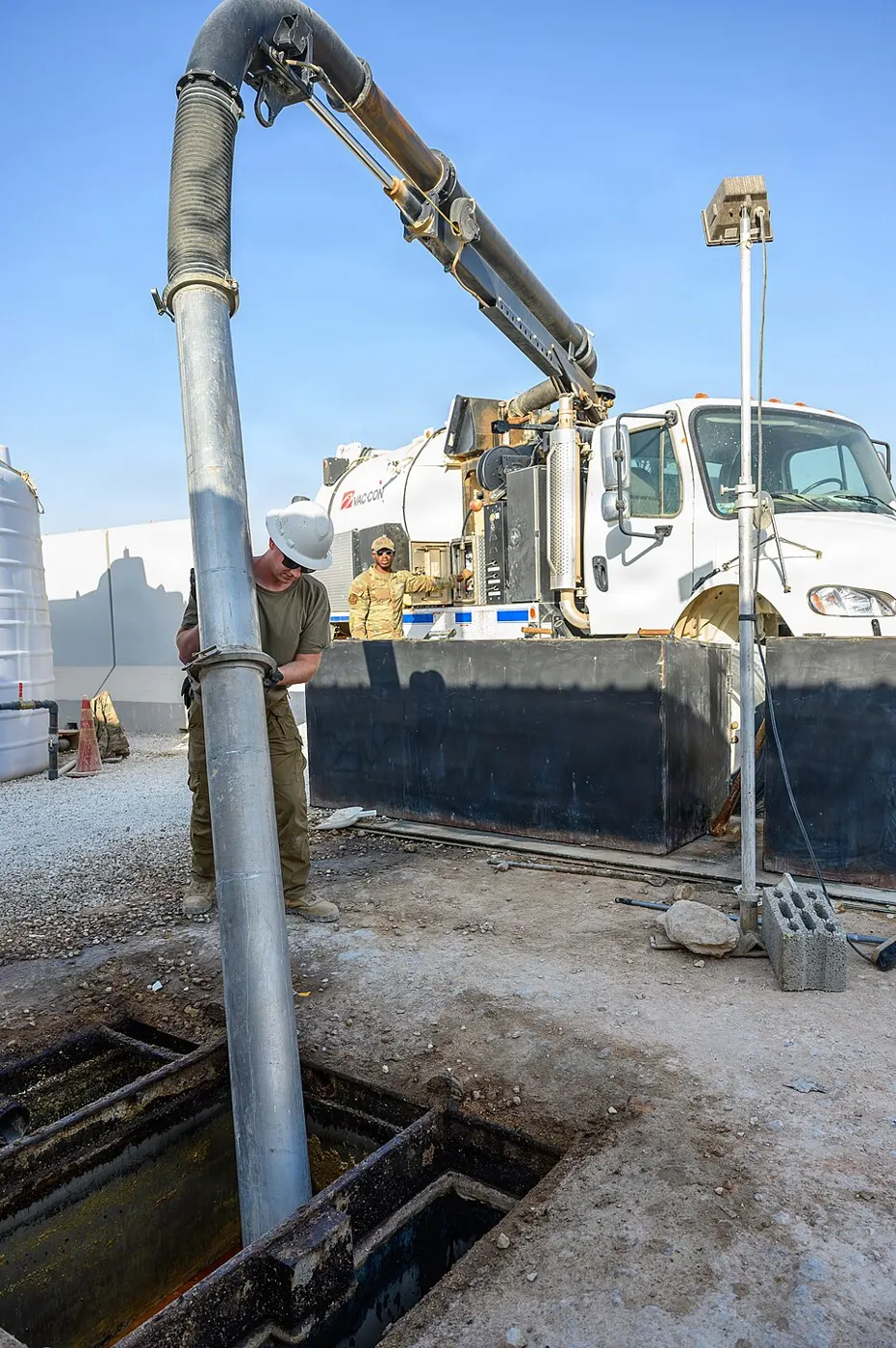
A trap under the sink, or a tank in the parking lot
Smaller kitchens often have a compact trap indoors near the sinks. Larger restaurants usually have an outdoor grease interceptor, a buried tank with lids at the surface. The idea is the same. The difference is size, and how often each one needs attention. A small trap in a busy kitchen can fill in a matter of weeks. A big interceptor might go months. The only way to know is to measure the layers on each visit and adjust.
Kitchen habits that stretch the time between pumpings
The less grease that reaches the trap, the longer it lasts. These habits help, and they're worth posting near the dish area:
- Scrape plates and pans into the trash before they go in the sink.
- Wipe greasy pans with a paper towel before washing.
- Keep strainers in every sink drain and empty them into the trash, not the disposal.
- Never pour fryer oil or pan drippings down any drain. Collect them in a container for a recycler.
- Don't run hot water to "clear" the trap. It only carries grease further down the line, where it cools and sticks.
- Go easy on the garbage disposal. Ground food adds to the sludge on the bottom of the trap.
Pumping day, from the kitchen's side
Most kitchens schedule service before opening or after close. Plan on keeping water out of the trap while the truck is working, which means no dish machine and no sink use on that line for a little while.
The technician measures the grease and solids before pumping, and that number is the one to pay attention to. It tells you whether your schedule is about right, stretched too long, or more frequent than it needs to be. After the trap is pumped down and the walls are scraped, the inside gets a look. Broken inlet or outlet fittings, cracked walls and lids that don't sit flat are all things you want to hear about now. Any repair should be quoted separately so you can decide.
Before the truck leaves, ask for a written service record. If an inspector stops by, that's what they'll want to see.
Restaurants on septic
Out in the county toward Rockwell, Faith and Cleveland, some restaurants, venues and church kitchens aren't on city sewer. Their grease trap drains into a septic tank. Grease that slips through thickens the scum in the tank and, worse, can reach the leach field and seal off the clay soil. A field ruined by grease is an expensive fix. On a septic property, keep the trap on a short schedule and keep the septic tank on its own regular pumping cycle too. If the field is already wet and smelly, read about leach field repair.
What drives the cost
- Trap or interceptor size
- How full it is, since a trap long past due takes more work
- How often it's serviced
- How far the truck has to reach to the lids
- After-hours or same-day scheduling
- Any repairs found during the visit, such as worn fittings or cracked lids (the same kinds of parts covered under septic tank repair)
Our septic cost page explains how pumping jobs get priced, and you get a written quote before work starts. Call (980) 944-4517 to set up service in Salisbury or nearby.
Questions people ask
How often should a Salisbury restaurant pump its grease trap?
It depends on the trap size and how much grease the kitchen produces. Some small traps need service every few weeks, and large interceptors can go longer. Measure the layers on the first few visits and set the schedule from that, and check with your utility or inspector in case they require a set interval.
Our floor drain backs up only during the rush. Is that the trap?
Very likely. A trap that's close to full can handle a trickle but not the surge of water during a busy service. It can also be grease buildup in the line past the trap. Pumping and checking the outlet will show which.
Do we need to close during service?
Not entirely, but the sinks and dish machine that drain into the trap should stay off while it's pumped. That's why most kitchens book before opening or after close.
Where does the grease trap waste go?
It should go to a facility that accepts grease trap waste. Ask your service provider where they take it, and keep their service records on file.
We just bought a restaurant and don't know when the trap was last pumped. What now?
Treat it as due. Have it pumped and inspected now so you start with a clean trap and a known condition, then set a schedule from there.