If sewage is coming up in your house right now, call (980) 944-4517. Then come back to this page while you wait. The next few minutes matter more for keeping people safe and the mess small than for fixing anything.
The first ten minutes
- Stop all water. Tell everyone in the house not to flush, shower or run the sink. Turn off the washer and dishwasher if they're running. Water you put in has nowhere to go but back up.
- Keep kids and pets out of any room or patch of yard with sewage in it.
- Leave the tank alone. Don't lift septic lids or try to open the tank. The gases inside can make a person pass out quickly, and an open tank is a fall hazard.
- If you have a pump and alarm, note whether the breaker for the pump has tripped and tell the technician. Don't open the pump tank.
- Skip the chemicals. Drain cleaners won't clear a septic backup, and they make the technician's job more dangerous.
- Jot down what you've seen. Which drain backed up first, whether there's a wet spot outside, and when the tank was last pumped.
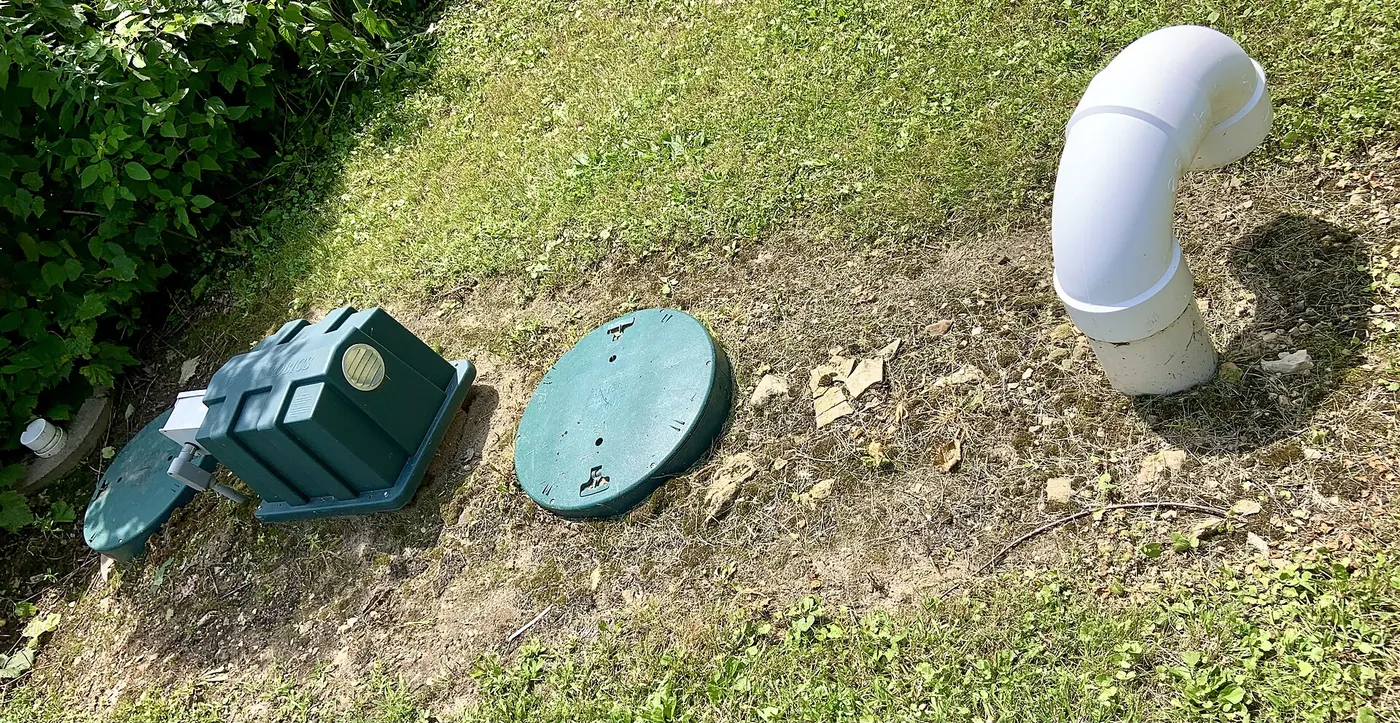
Which kind of emergency is it?
| What you're seeing | What it often means | How fast to act |
|---|---|---|
| Sewage in a tub, shower or floor drain | Full tank, blocked line to the tank, or a field that has stopped taking water | Now. Stop water and call. |
| Septic alarm sounding | Water too high in the pump tank, often a failed pump or stuck float | Today. Cut water use way back. |
| Every drain slow, with gurgling | System near capacity or a partial blockage | Today, before it turns into a backup. |
| Sewage or soggy, smelly ground in the yard | Overfull tank, broken line or saturated leach field | Today. Keep people and pets off it. |
| Cracked or caved-in lid, or a hole over the tank | A fall hazard | Now. Block it off and call. |
| A faint odor outside after rain | Often minor, sometimes a lid or vent issue | Soon. Schedule a visit. |
Silencing an alarm stops the noise. It does nothing about the water rising in the tank.
Cleaning up safely
Sewage carries bacteria and viruses that can make people sick. Until the system is fixed, keep cleanup to what you need to stay safe:
- Wear rubber gloves and boots, and keep the area ventilated.
- Keep children, pets and anyone with a weak immune system away.
- Don't use the plumbing to rinse things off. That water ends up right back where it came from.
- Wash your hands well afterward, and wash splashed clothes separately.
- Soaked carpet, drywall and other porous materials often can't be cleaned well. For more than a small spill, a water damage cleanup company may be the right call.
- Take photos before you clean, and call your homeowners insurance to ask what's covered.
Outside, keep everyone off the wet spots and don't try to dig, drain or cover them.
Getting same-day help
When you call, say plainly that it's an emergency: sewage in the house, an alarm, a hole over the tank. That moves the call to the front of the line. Many emergency calls around Salisbury, Spencer, East Spencer and China Grove can get a same-day visit. If the earliest visit is later, you'll get guidance on how to hold things steady until then.
When the technician arrives, the usual steps are:
- Find and open the tank and check the liquid level. That one look says a lot. A full tank points one way. A low tank with a backed-up house points to the line in between.
- Relieve the pressure. Often that means pumping the tank so the house can drain again.
- Find the cause. A clogged baffle, a failed pump, a stuck float, a broken line or a saturated field.
- Explain it and quote the fix in writing. You decide what happens next.
After the emergency
Pumping gets the house working again, but it doesn't fix the cause. If the backup came from a broken baffle, a failed pump or float, or a cracked pipe at the tank, that's septic tank repair work. If the field is soaked and won't take water, read about leach field repair. And if the technician had to dig through clay just to find your lids in the middle of all this, ask about risers so the next visit starts faster.
What emergency service costs
It depends on when you call, how hard the tank is to reach, whether pumping is needed and what turns out to be broken. An after-hours visit usually costs more than a scheduled one. You should get a price before the work goes past the first look. Our septic cost page explains the rest.
Questions people ask
Is it safe to stay in the house during a septic backup?
Usually, if the sewage is limited to one area and you keep people and pets away from it. Ventilate the area and stop using water. If a lot of sewage has come in, or someone in the house is especially vulnerable, staying elsewhere until it's cleaned up can be the better choice.
Why did this happen right after a holiday?
A full house means extra flushes, showers, laundry and cooking grease all at once. A system that was already close to full, or a line with a weak spot, can't handle the surge. That's why so many emergency calls come the day after a big gathering.
Will my homeowners insurance pay for this?
It depends on your policy. Some cover sudden damage inside the house, and many don't cover a septic system that failed from age or skipped maintenance. Call your agent and keep photos and the technician's written findings.
Should I call a plumber or a septic company?
If one drain is slow and the rest are fine, a plumber is often the right first call. If every drain is slow, the toilets gurgle, the alarm is on or sewage is showing up outside, it's a septic call.
How do I keep this from happening again?
Fix the cause the technician found, then pump on schedule, every three to five years for most homes. Spread out laundry, keep wipes and grease out of the drains and point gutter water away from the field.