The leach field, also called the drain field, is the part of your septic system that does the final job. Liquid leaves the tank, runs through buried perforated lines and soaks into the soil, where the ground filters it. When the field stops accepting water, everything backs up behind it.
Why leach fields fail around Salisbury
Red clay is a big part of the story here. Much of the soil around Salisbury and rural Rowan County is heavy clay that drains slowly. A drain field in clay works fine when it's sized right and treated well, but it doesn't forgive much. The usual causes of failure:
- Solids from the tank. A tank that went too long without pumping, or one with a missing outlet baffle, sends sludge and grease into the lines. That material seals off the soil.
- Too much water. Big laundry days, leaky toilets and gutters draining over the field overload it. Clay can only take so much at once.
- Roots. Trees and shrubs planted near the field send roots into the lines.
- Crushed lines. Driving or parking on the field, or building over it, can crack pipes and compact the soil.
- Age. Older fields eventually build up a layer of biological mat that slows absorption. A well-maintained field can last a long time, but not forever.
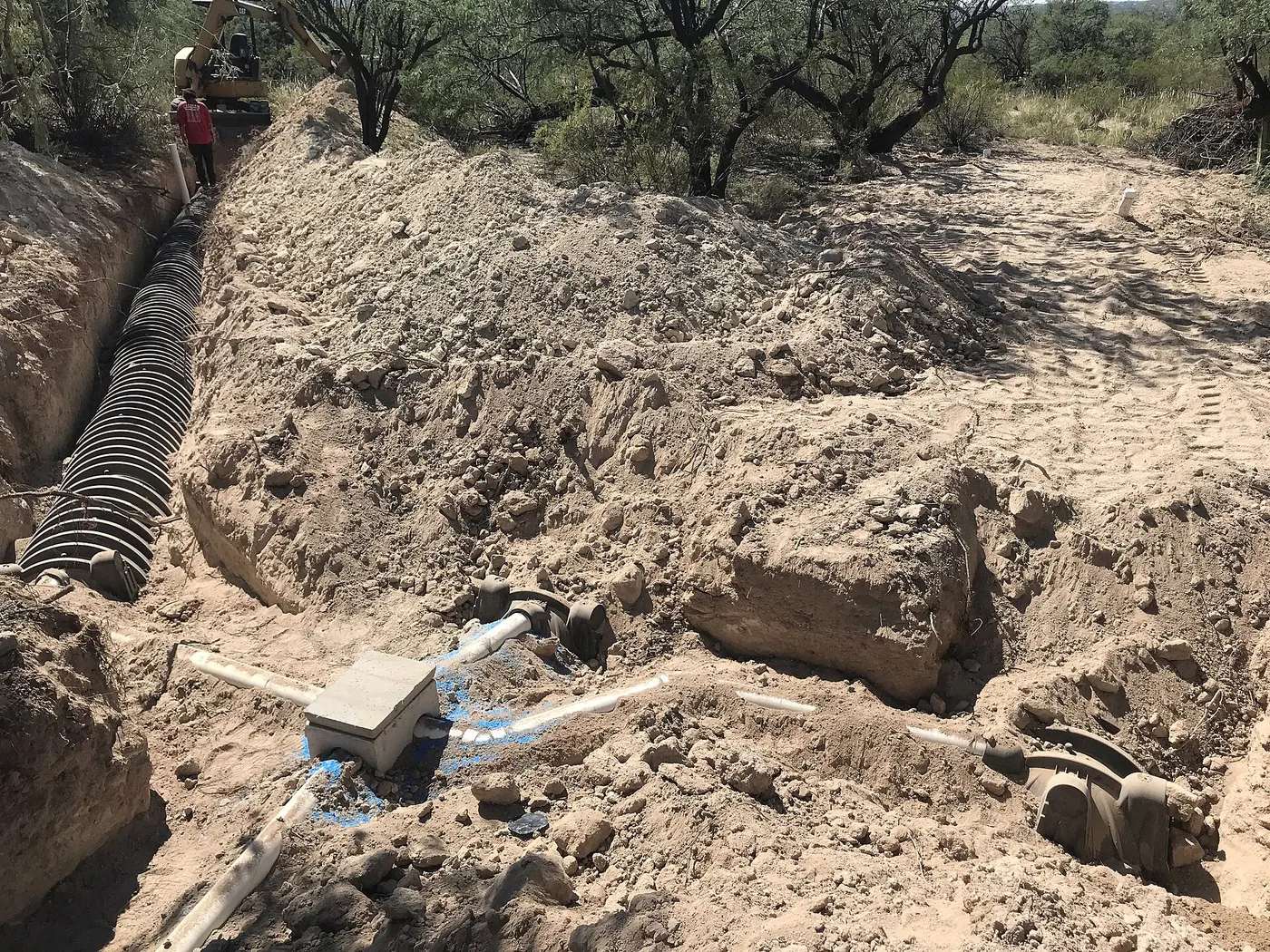
Signs of a failing leach field
- Soggy or spongy ground over the field, even in dry weather
- Standing water or surfacing sewage
- Strips of grass greener than the rest of the yard, following the lines
- Sewage smell outside
- Slow drains and gurgling that come back soon after pumping
- Water flowing back into the tank from the field when it's pumped
How a leach field problem gets diagnosed
A soggy yard isn't always a dead field. Before anyone talks about repair, the whole system should get checked.
- Pump and inspect the tank. The technician looks for missing baffles and watches for backflow from the field.
- Check the distribution box. If your system has one, a tipped or clogged box can send all the water to one line and drown it while the rest sit dry.
- Locate and probe the lines. Next, the crew finds where the field runs and looks for broken, crushed or root-filled sections.
- Look at the water load. Leaks, downspouts and household habits all matter.
Sometimes the answer is a cleared line or a leveled distribution box. Sometimes it's a few new lines. And sometimes the field is done and needs to be replaced.
Leach field repair options
Depending on what turns up:
- Line repair: Replacing a crushed or broken section of pipe.
- Distribution box repair or replacement: Getting water to spread evenly again.
- Root removal and moving plantings away from the field.
- Adding lines to an existing field when space and soil allow.
- Full field replacement: New lines in a new or rebuilt area of the yard.
Field replacement almost always needs a permit through Rowan County Environmental Health, and the county may need to evaluate the soil. On those jobs, the contractor pulls the permit and handles the county side.
What leach field repair costs
Leach field repair or replacement is usually the largest septic job a Salisbury homeowner will face. Small repairs like a distribution box or a short section of line cost far less than a full replacement, and a full replacement in tough clay or on a tight lot costs more than one on open, easy ground. See our septic cost page for more detail. Your real price comes from a free on-site visit and a written quote.
What a good contractor won't do
- Quote you a new field before checking the tank and distribution box.
- Promise a fix will work in soil that can't support it. If the ground won't take water, they'll tell you.
- Leave you guessing about where the new lines run.
Protecting a field once it's working
After a repair, the habits that matter most are simple. Keep the tank pumped on schedule. Spread water use through the week. Keep cars, sheds and trees off the field. Point downspouts away from it. If your tank lids are buried, riser installation makes regular pumping easier to keep up with. If your tank itself needs work, see septic tank repair.
Questions people ask
Can a failing leach field be saved without replacing it?
Sometimes. If the problem is a broken line, a tipped distribution box or an overloaded field, a repair and better water habits can bring it back. If the soil itself has sealed off from years of solids, replacement is usually the honest answer.
How long does a leach field replacement take?
The work itself is often a few days. The longer part can be permitting and any soil evaluation the county requires. Expect a realistic timeline with your quote.
Will a leach field repair tear up my yard?
There will be digging, and the area over the field will need time to grass back in. A careful crew keeps the work area as tight as it can and grades it back when they're done.
Does heavy rain cause drain field problems?
Heavy rain can saturate clay soil and leave the field sluggish for a while, especially if gutters drain toward it. That's temporary. If sogginess and slow drains stick around in dry weather, the field likely has a real problem.