When something goes wrong with a septic system, a lot of homeowners brace for the worst. A new system, a torn-up yard, a five-figure bill. Most of the time, that's not where it ends up. A septic tank is a fairly simple thing, and when one piece of it breaks, you can usually fix that piece.
Common septic tank repairs in Salisbury
These are the most common septic repairs around Salisbury and Rowan County:
Broken or missing baffles
Baffles are the fittings at the inlet and outlet of the tank. The inlet baffle directs incoming waste down into the tank. The outlet baffle keeps floating scum from flowing out to the drain field. On older concrete tanks, these are often concrete and can crumble with age. When the outlet baffle is gone, solids go straight to the field. Replacing a baffle is a modest repair that protects a much more expensive part of your system.
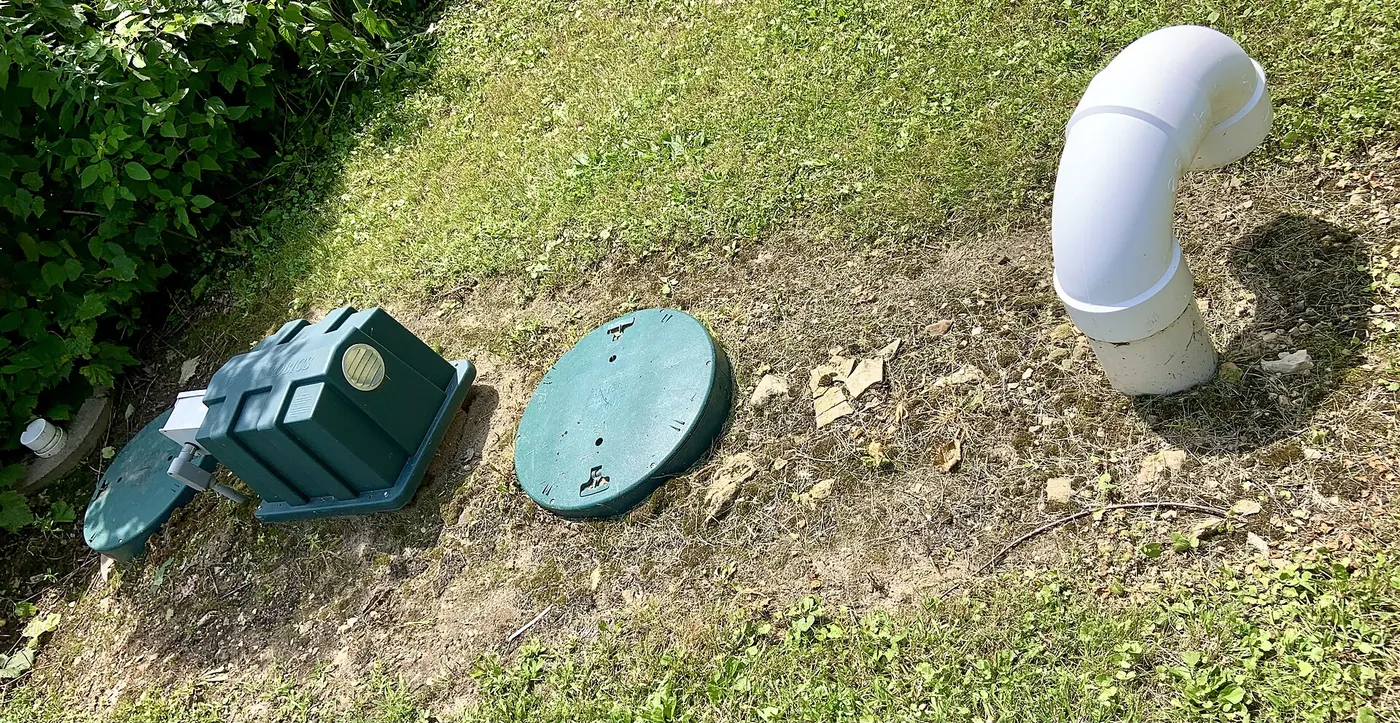
Cracked or damaged lids
Lids crack from age, from being driven over or from being dug up and set back down too many times. A cracked lid lets in rainwater and roots, and it's a safety hazard. A bad lid can be replaced, and it's a good time to think about riser installation so the new lid sits at ground level.
Broken pipes
The pipe from the house to the tank and from the tank to the drain field can crack, settle or separate, especially in clay that shifts with wet and dry seasons. Roots love those joints. A broken line can cause backups, soggy spots or sewage smell. The fix is digging to the problem and replacing the section.
Pumps and alarms
Some homes, often where the field sits uphill from the house, use a pump to move effluent out to the field. Pumps wear out, floats stick and alarms fail. If your septic alarm is going off, the system is telling you the pump isn't keeping up. Don't ignore it.
Tank cracks and leaks
A cracked tank can let groundwater in, which floods the drain field, or let sewage out into the soil. Some cracks can be sealed. If the tank is too far gone, replacing the tank alone may make more sense than replacing the whole system.
Signs you need a septic repair
- A septic alarm sounding or a red light on the alarm panel
- Sewage odor near the tank even after pumping
- Backups that come back soon after the tank was pumped
- A sinking or soft spot over the tank or lines
- Pumping crews telling you a baffle is missing
- Water rising in the tank faster than it should
How a repair job works
- Free visit and diagnosis. The technician finds the tank, opens it up and traces the problem. Often that means pumping first so they can see inside.
- Written quote. You get a clear price for the specific repair.
- Permit, if needed. Some repairs need a permit from Rowan County Environmental Health. On those jobs, the contractor pulls it.
- The repair. Most baffle, lid and pipe repairs are done in a day. Pump replacements are usually same day once the part is on hand.
- Walk-through. The technician shows you what was replaced and what to watch for.
What septic tank repairs cost
Most tank repairs fall into one of two groups:
- Minor repairs like baffles, lids and short pipe sections: the smaller, quicker jobs
- Pump or alarm replacement: more parts and more labor, so a bigger bill
Depth, access and the condition of what's around the problem all move the price. See the septic cost page for more, and know that your real price comes from a free visit and written quote.
What to ask any septic contractor before a repair
- What exactly is broken, and can you show me?
- Is this the cause of my problem, or a symptom of something else?
- Does this repair need a permit?
- Should I pump the tank at the same time?
- What should I watch for after the repair?
A good contractor will answer all of these without hesitation. If the answer to every problem is "you need a new system," get a second opinion.
When a repair isn't the answer
If the drain field is saturated and won't take water, fixing the tank won't solve it. A good contractor will tell you straight if the real issue is in the field and walk you through leach field repair. If the whole system is past saving, they should talk about septic installation.
Questions people ask
My septic alarm is going off. What should I do?
Cut back on water use right away. No laundry, short showers, fewer flushes. Check that the breaker for the pump hasn't tripped. Then call (980) 332-5896. The alarm usually means the pump chamber is filling faster than it empties, and running a lot of water can cause a backup.
Can a broken baffle really damage my drain field?
Yes. The outlet baffle is what keeps floating grease and scum in the tank. Without it, that material flows straight into the drain field lines and clogs the soil. A baffle repair costs far less than a field repair.
Can you repair a concrete septic tank, or does it need replacing?
Many concrete tanks can be repaired. Baffles, lids and some cracks can be fixed. If the tank walls are badly deteriorated or the tank has shifted, replacing the tank may be the better long-term choice. The technician should show you what they see and give you options.
How long do septic pumps last?
It varies with the pump, how much the household uses and how well the tank is maintained. Keeping the tank pumped on schedule protects the pump from solids, which helps it last longer.