Here's a question worth asking: where are your septic lids right now? If the honest answer is "somewhere under the grass," you're not alone. Most older septic tanks around Salisbury were installed with the lids a foot or more below ground. That made sense at the time. It doesn't make much sense when you're paying for digging every time the tank needs attention.
What a septic riser is
A riser is a sturdy pipe-like collar, usually plastic or concrete, that attaches to the opening of your septic tank and extends up to ground level. A secure lid sits on top, flush with the yard or just above it. Instead of digging, you lift the lid.
Most tanks have two openings, one over the inlet and one over the outlet. Some have a third for a pump chamber or filter. Typically each one that needs regular access gets a riser.
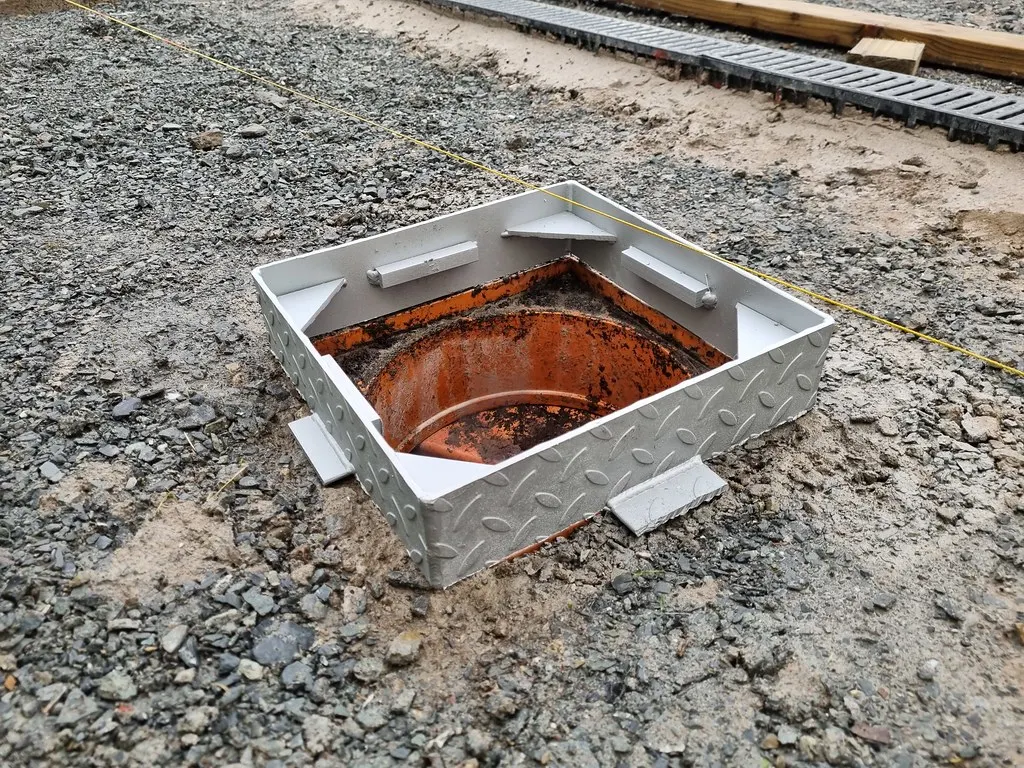
Why risers make sense in Salisbury
Digging down to a buried lid in red clay is slow, messy work. Clay is heavy when it's wet and hard as brick when it's dry. Every time the tank is pumped or inspected, someone has to find the lid and dig it out, and you pay for that time.
Risers help in a few ways:
- Cheaper pumping. No digging means a faster visit and a lower bill each time.
- Easier to keep a schedule. When pumping is quick and painless, people actually do it. That protects the drain field.
- Easier inspections. If you sell the house, buyers and inspectors appreciate a tank they can open without a shovel.
- No lost tank. You always know where it is.
- Less wear on the tank. Old concrete lids crack from being dug up and set back down. A riser puts that wear on a lid made for it.
Signs you'd benefit from risers
- You don't know exactly where your tank lids are
- Your last pumping bill included time for digging
- You're planning to sell in the next few years
- You have an older tank with a concrete lid that's cracking
- You have a pump or filter that needs regular checks
How riser installation works
- Find and expose the tank. The installer locates the lids and digs down to them.
- Pump the tank. Most riser installs are done along with a pumping, since the tank is open anyway.
- Check the openings. The installer looks at the condition of the tank top and the existing lids.
- Attach the risers. Each riser is sealed to the tank so groundwater and roots stay out.
- Set the lids. The lids sit at grade and are secured so kids and pets can't open them.
- Backfill and clean up. The crew grades the soil back around the risers.
Most riser installs take a few hours and are done in one visit.
What risers cost
The price of septic risers depends on how many openings get risers, how deep the tank is and what material is used. Doing it at the same time as a pumping saves you a separate dig. See our septic cost page for what moves the price. Your real price comes from a free visit and written quote.
Plain talk on riser lids
A septic lid at ground level has to be safe. A loose or broken lid over an open tank is a real danger to children and pets. Every lid should be secured so it can't be lifted by hand without a tool. If you have any lid on your property, riser or not, that's cracked, loose or sinking, call us and get it fixed. That's not something to put off.
A few other tips:
- Don't bury the new lids under mulch or landscaping fabric. The whole point is easy access.
- Mowing over flush lids is fine. Driving heavy equipment over them is not.
- Mark your calendar with the next pumping date while you're at it.
Risers on new systems
If you're getting a new system, ask for risers from day one. It costs less during septic installation than adding them later. And if the installer finds a cracked lid or broken baffle while putting risers on an older tank, they should show you and quote the septic tank repair separately.
Questions people ask
Are septic risers worth it?
For most homes, yes. If you pump every three to five years, the savings on digging add up over time, and the convenience makes it far more likely you'll stay on schedule. That protects the drain field, which is the most expensive part of the system.
Will a riser make my yard look bad?
Riser lids are usually green or black and sit at ground level, so they blend in with the lawn. Most people stop noticing them quickly.
Can risers be added to any septic tank?
Most tanks, yes. Very old or damaged tank tops may need a repair first. The installer should check the tank openings during the visit and tell you if anything needs fixing before the riser goes on.
Do septic risers let odors out?
A properly sealed riser with a secure lid shouldn't. If you smell sewage around a lid, the seal may need attention or there may be another issue, so give us a call.